
Trump Takes the White House Ballroom Fight to the Supreme Court. Here Is What the Justices Must Decide
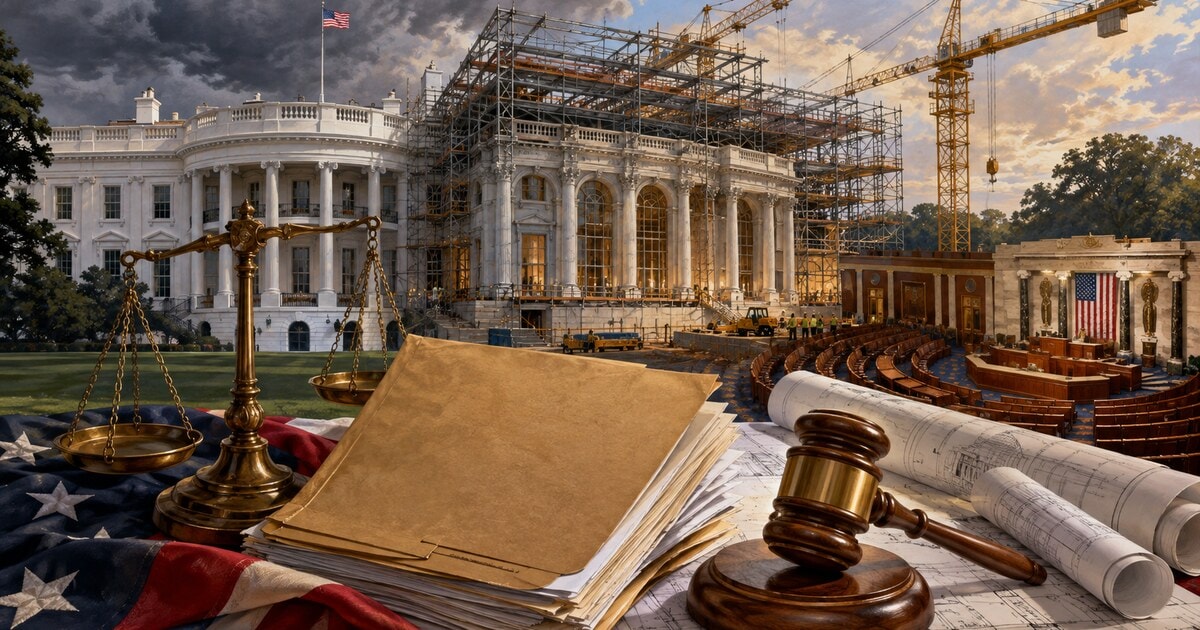
Trump’s Ballroom: Build While the Appeal Waits?
The Trump administration asked the Supreme Court to keep White House ballroom construction moving while it appeals a ruling requiring congressional approval. The immediate question is a stay, not the final legality of the project.
The dispute over President Donald Trump's White House ballroom reached the Supreme Court on Friday, turning a highly visible construction project into an emergency test of presidential power, congressional authority and the courts' ability to preserve meaningful review while work continues.
The administration asked the justices to keep a divided D.C. Circuit ruling on hold while it prepares a full appeal. That lower-court ruling upheld an order blocking aboveground construction unless Congress authorizes the project. The immediate Supreme Court request is therefore procedural but consequential: whether construction can continue during the next stage of litigation. It is not yet a final decision on whether the ballroom is lawful.
Chief Justice John Roberts set Tuesday as the deadline for the National Trust for Historic Preservation to respond, according to the Associated Press. The D.C. Circuit had delayed the effect of its own decision for 14 days, giving the administration time to seek Supreme Court intervention before the order is set to take effect Aug. 21.
The project is large by any ordinary measure. Reuters and AP describe a $400 million, approximately 90,000-square-foot ballroom built where the East Wing stood before its demolition. The administration says private donations cover the project and told the Court it is on time, under budget and roughly 65 percent complete. Those are government assertions contained in or described from the filing; they are not an independent audit of costs, financing or completion.
Solicitor General D. John Sauer argues that the structure is part of an integrated military and security complex. The filing describes protective functions tied to the site, and the administration says stopping aboveground work would create security, safety and financial problems. AP reported that the filing referenced a July 8 threat of a missile attack against Air Force One as part of the national-security argument.
The preservation group and the lower-court majority frame the case differently. Their central position is that a president cannot undertake a transformation of the White House of this scale without Congress. The D.C. Circuit majority wrote that whether to build a massive ballroom is for Congress to decide, not a matter of unilateral executive action. It also rejected the notion that invoking national security automatically eliminates legal constraints.
The distinction between aboveground and underground work is critical. A district judge allowed construction necessary for safety and security below the planned ballroom, including bunkers, military installations and medical facilities, while ordering a stop to aboveground ballroom construction. The government's Supreme Court request argues that the pieces are functionally integrated and that a pause would damage the larger project. The challengers dispute that the aboveground ballroom must proceed for the secure work below it to continue.
A fair account must also include the administration's threshold argument. The government contends that the National Trust lacks legal standing to sue. Judge Neomi Rao, the Trump-appointed dissenter on the D.C. Circuit panel, agreed that the group lacked standing and also read existing law to give the president authority over White House improvements. If the Supreme Court accepts the standing argument, it could end or narrow the case without resolving every underlying separation-of-powers question.
The stay request asks the justices to weigh familiar emergency factors: the administration's likelihood of success, whether it will suffer irreparable harm without relief, the harm to the opposing party and the public interest. Those factors are difficult here because construction itself changes the facts. A pause can impose delay and cost. Continued work can make judicial review less useful if the disputed structure is nearly complete before the courts reach a final answer.
That is why speed is part of the controversy. AP reported that the National Trust accused the administration of trying to outrun the courts and cited plans for substantial rebar and concrete work in the coming week. Reuters reported the Trust's broader claim that the administration is frustrating review. Those are allegations by the plaintiff, not judicial findings about motive. The administration says the pace reflects security and construction needs, not an effort to defeat the courts.
Congress remains the most direct political off-ramp. The lower courts have said authorization from Congress would permit aboveground work to proceed. The administration could seek a statute expressly approving the project and its funding structure. Congress could authorize, reject, limit or condition the ballroom, demand financial disclosures, set preservation requirements and establish oversight. A recorded vote would move the decision from litigation over implied power to democratic accountability.
Private financing does not by itself answer the authority question. The White House is public property, and the constitutional dispute concerns who may authorize a major alteration, not simply who pays the construction invoice. Conversely, the project's public status does not mean every renovation requires Congress to design the floor plan. The line between routine improvement and a transformation demanding express legislative approval is the core legal disagreement.
The Court should require a complete factual record. Which parts of the project are essential to security? Which can be paused safely? How much private money is committed, from whom and under what terms? What taxpayer costs are tied to protective systems or ongoing operations? What work remains above ground, and what would be irreversible before ordinary appellate review concludes? Specific answers would let the justices assess harm without accepting either side's broadest rhetoric.
Political language should not replace that analysis. Trump has called the appellate decision politically motivated and says the project protects the president and visitors. The National Trust says the administration is evading the rule of law. Both sides have strong institutional interests. The Court's task is to apply the stay standards and governing statutes, not choose which press statement sounds more urgent.
For the public, the next dates are straightforward. The challengers' response is due Tuesday. The appeals-court pause is scheduled to expire Aug. 21 unless the Supreme Court intervenes. A grant would allow construction to continue while the case proceeds; a denial would let the restriction on aboveground work take effect, subject to the security exceptions already recognized. Neither outcome would necessarily be the final judgment on the merits.
The White House is both a working security site and a national civic symbol. That dual character makes careful review more important, not less. Presidents need the ability to protect and maintain the executive residence. Congress retains constitutional and statutory authority over public property and spending. Courts must be able to issue relief before a disputed project becomes a finished fact.
The Supreme Court now has to decide how those interests operate during an appeal. The narrow question is who bears the risk of delay. The larger accountability question is whether any president may make a permanent change of this scale first and seek authorization later. Whatever the justices do on the stay, Congress and the administration still owe the country a transparent record of authority, financing, security necessity and public stewardship.
Related RepWatchr records
Source Packet
Source review recorded August 15, 2026 by RepWatchr source desk.
Sources linked
Share the receipt, not just the outrage.
Source-backed snippet
RepWatchr story: Trump Takes the White House Ballroom Fight to the Supreme Court. Here Is What the Justices Must Decide. Read the linked sources and review status before sharing. https://www.repwatchr.com/news/trump-white-house-ballroom-supreme-court-stay-2026
Before the meeting
Before the meeting: open Trump Takes the White House Ballroom Fight to the Supreme Court. Here Is What the Justice..., name the public source, ask what record answers the question, and request the missing link be posted for voters.
Ask this public question
Can you point voters to the public record, vote, filing, agenda, or source link that supports your position on Trump Takes the White House Ballroom Fight to the Supreme Court. Here Is What the Justice...? Current source trail: Reuters.
Your next useful move
Pick one action that adds a record, checks a claim, or shares the receipt.
Source file
This page is for the story, the receipt, and the next record to check.
Story
Trump Takes the White House Ballroom Fight to the Supreme Court. Here Is What the Justices Must Decide
Receipt
Source: Reuters
Follow-up
Review linked profiles, source links, or missing public records.
Social snippet
RepWatchr story: Trump Takes the White House Ballroom Fight to the Supreme Court. Here Is What the Justices Must Decide Why it matters: The Trump administration asked the Supreme Court to keep White House ballroom construction moving while it appeals a ruling requiring congressional approval. The immediate question is a stay, not the final legality of the project. Receipt: Source: Reuters Source file: https://www.repwatchr.com/news/trump-white-house-ballroom-supreme-court-stay-2026