
Kennedy Center Board Revives Two-Year Closure and Trump Inscription, Setting Up a New Court Test
Kennedy Center Closure: What Will Courts Allow?
The Kennedy Center board voted to pursue a two-year renovation closure, add a Trump inscription to the facade and rename the site’s plaza. A federal judge blocked the board’s earlier process and ruled that only Congress can rename the center.
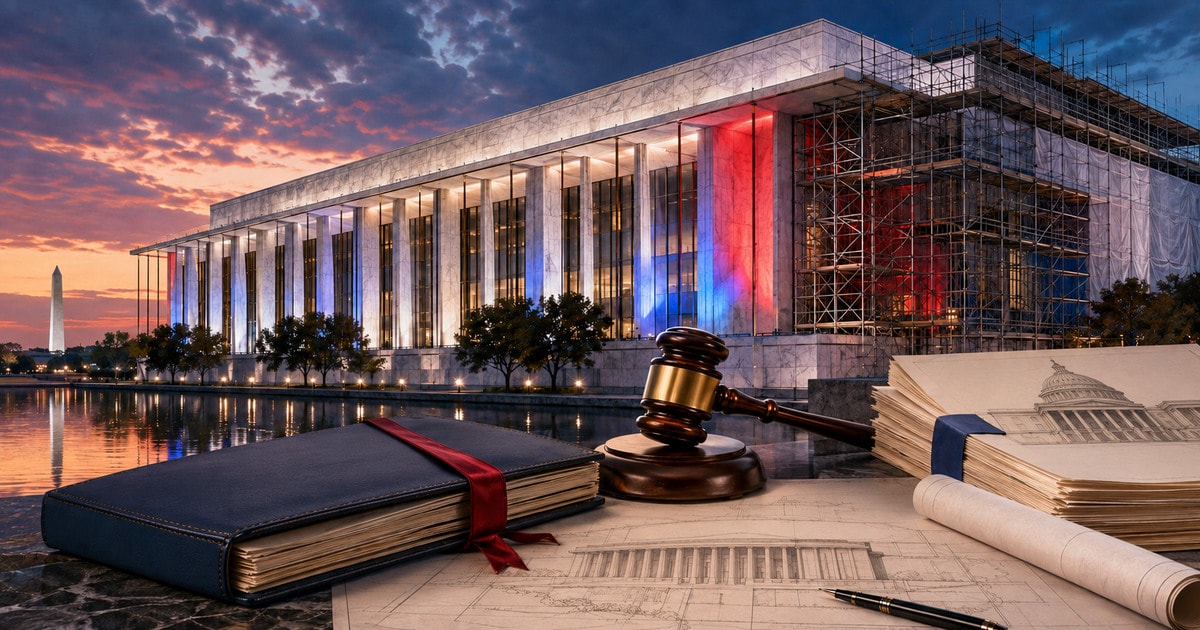
The Kennedy Center board has voted again to close the main performing-arts complex for two years and to place President Donald Trump’s name on the building—this time as a renovation inscription rather than as the center’s formal title. The Aug. 13 action does not end the dispute. It moves the next accountability question back to federal court.
Reuters reported that the board approved facade language identifying the John F. Kennedy Center for the Performing Arts as restored and renovated by Trump and voted to call the physical site the President Donald J. Trump Plaza. The board also approved a two-year closure. The Kennedy Center did not immediately provide Reuters a response, while a second person familiar with the meeting confirmed the decisions.
The Associated Press separately reported the two-year closure vote, citing two people familiar with the action, and said some outdoor programming may continue. Before the meeting, management presented three approaches: a full closure, a partial closure with limited access and a phased plan addressing the most serious infrastructure needs while maintaining programming. The board chose the broadest shutdown.
Supporters argue that a full closure will allow faster, safer and more coherent renovation of an aging national institution. The White House said Trump’s leadership is putting the center on a path to become a leading cultural institution. A board responsible for a large public venue does have substantial discretion over operations and safety.
But discretion is not exemption from law or from the court order already in place. On May 29, U.S. District Judge Christopher Cooper preliminarily blocked implementation of the board’s March 16 closure decision. His order did not declare that the center can never close. It said the defendants could not carry out that particular decision unless the board approved a closure consistent with the court’s opinion and the court later modified or dissolved the injunction.
That distinction is essential. Calling Thursday’s vote automatically lawful would get ahead of judicial review. Calling any renovation closure permanently forbidden would also overstate the ruling. The issue is whether the board’s new process genuinely considered its statutory responsibilities, the operational alternatives and the harms that a long shutdown could create.
The name dispute is less flexible. Federal law designates the John F. Kennedy Center for the Performing Arts as the sole national memorial to President John F. Kennedy in Washington and its environs. The governing statute directs the board to maintain and administer the center as a national performing-arts institution and a living memorial to Kennedy.
Cooper ruled in May that the board had exceeded its authority when it added Trump’s name as part of the institution’s title. Workers removed the letters in June. A federal appeals court later declined to restore the name while litigation continues, finding that claims of fundraising harm were not supported with specific facts or evidence, according to Reuters.
Thursday’s resolution attempts a narrower route: an inscription crediting Trump for restoration, plus a separate name for the plaza. Whether that wording is a permissible donor-style recognition, an additional memorial prohibited by the statute or an indirect renaming is now the central legal question. The board’s vote states an intention; it does not erase the court’s power to interpret and enforce federal law.
Rep. Joyce Beatty, an Ohio Democrat and ex officio trustee who brought the earlier lawsuit, announced the new action and opposes it. The board is dominated by Trump appointees. Those facts do not decide the merits, but they make process transparency especially important. Minutes, votes, engineering reports, cost estimates and legal advice should be public.
The shutdown choice also deserves a full operational record. The public needs to know which halls and systems require simultaneous work, why phased construction was rejected, what programs will move off-site, what happens to employees and contractors, how ticket holders will be treated, and what milestones could shorten or lengthen two years. “Safety” should be supported by inspection findings and a construction sequence, not used as a substitute for them.
The board should also publish the complete renovation budget and funding sources. A presidential inscription tied to restoration raises obvious questions about who provided money, what recognition policies apply to other donors, whether public funds are involved and who controls changes to a congressionally designated memorial. Equal standards matter more than the political identity of the person being honored.
Critics, meanwhile, should separate objections to Trump from objections grounded in statute, governance or preservation. A national arts center can need major repairs even when its board is politically controversial. The strongest case against a full closure is not that opponents dislike the chairman; it is evidence that safer, less disruptive alternatives can accomplish the work.
The Kennedy Center belongs to the country as both an operating arts venue and a memorial created by Congress. That dual mission is why neither a White House statement nor a board resolution should be treated as the final word. Courts enforce the statute, Congress can change it, and the board must make operational decisions on a defensible record.
For now, the accurate status is limited but important: the board voted for a new two-year closure plan, a Trump restoration inscription and a Trump-named plaza; an injunction remains part of the case; and further legal review is likely. The public should demand the documents behind the vote before anyone cuts stone, cancels another season or declares the controversy settled.
Related RepWatchr records
Source Packet
Source review recorded August 14, 2026 by RepWatchr source desk.
Sources linked
Share the receipt, not just the outrage.
Source-backed snippet
RepWatchr story: Kennedy Center Board Revives Two-Year Closure and Trump Inscription, Setting Up a New Court Test. Read the linked sources and review status before sharing. https://www.repwatchr.com/news/kennedy-center-board-closure-trump-inscription-2026
Before the meeting
Before the meeting: open Kennedy Center Board Revives Two-Year Closure and Trump Inscription, Setting Up a New Cou..., name the public source, ask what record answers the question, and request the missing link be posted for voters.
Ask this public question
Can you point voters to the public record, vote, filing, agenda, or source link that supports your position on Kennedy Center Board Revives Two-Year Closure and Trump Inscription, Setting Up a New Cou...? Current source trail: Reuters.
Your next useful move
Pick one action that adds a record, checks a claim, or shares the receipt.
Source file
This page is for the story, the receipt, and the next record to check.
Story
Kennedy Center Board Revives Two-Year Closure and Trump Inscription, Setting Up a New Court Test
Receipt
Source: Reuters
Follow-up
Review linked profiles, source links, or missing public records.
Social snippet
RepWatchr story: Kennedy Center Board Revives Two-Year Closure and Trump Inscription, Setting Up a New Court Test Why it matters: The Kennedy Center board voted to pursue a two-year renovation closure, add a Trump inscription to the facade and rename the site’s plaza. A federal judge blocked the board’s earlier process and ruled that only Congress can rename the center. Receipt: Source: Reuters Source file: https://www.repwatchr.com/news/kennedy-center-board-closure-trump-inscription-2026