
A $60,000 Safety Boost: Three East Texas Volunteer Fire Departments Get Room to Choose What They Need
East Texas Fire Grants: $60,000, Local Choices
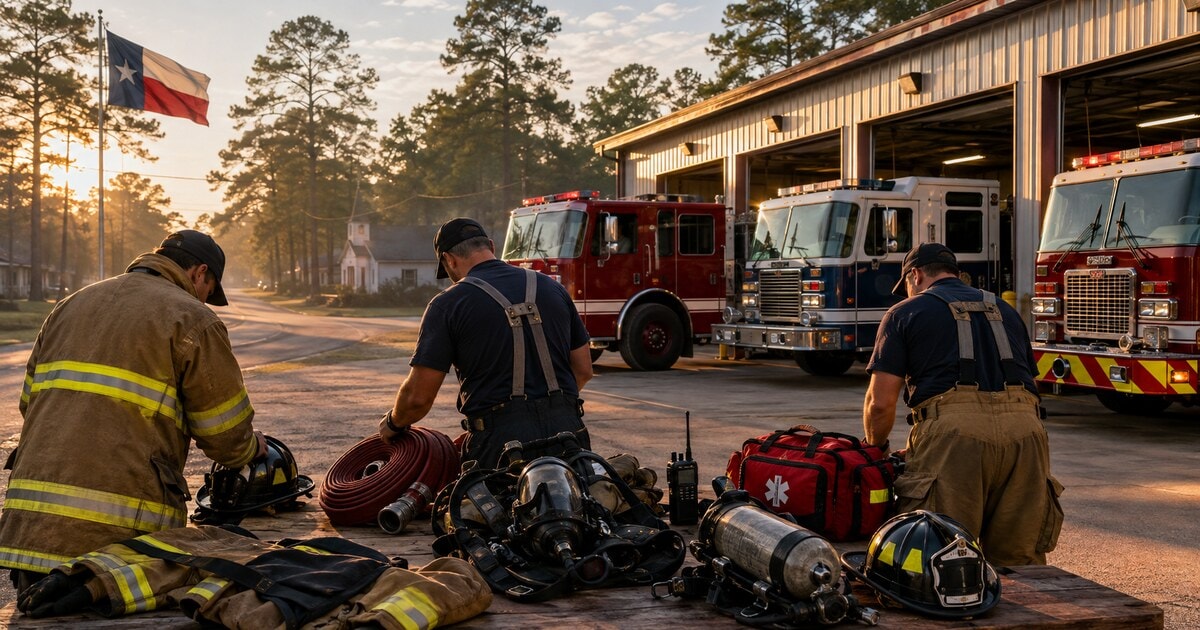
Klondike, Gallatin and Cushing volunteer firefighters each received $20,000 for equipment, training or operating needs—flexible support for the neighbors who answer rural emergencies.
Three East Texas volunteer fire departments have received something small agencies rarely get enough of: money they can direct toward the local readiness need they know best.
Oncor announced a $60,000 investment for the volunteer departments in Klondike, Gallatin and Cushing, with $20,000 going to each. The company said the departments may use the grants for operating needs or for equipment and other resources that serve their communities. The June 2 award is complete; what the departments buy with it has not yet been publicly itemized.
That distinction matters. RepWatchr can verify the recipient departments, the total and the unrestricted purpose stated by the donor. We cannot responsibly claim that a grant already purchased a brush truck, protective gear, radios or training unless a department publishes that record. The good news is the flexibility itself: local chiefs do not have to force three different communities into one identical shopping list.
Klondike Volunteer Fire Department serves its Delta County community. Gallatin Volunteer Fire Department serves a small Cherokee County city and surrounding area. Cushing sits in the Piney Woods northwest of Nacogdoches. In each place, volunteers are part of the first line of response when a structure catches fire, a wreck traps a driver, a storm knocks down power lines or a grass fire begins moving toward homes.
Oncor East Region Customer Services Director Tom Trimble said the utility’s safety commitment includes supporting first responders and called the three departments essential to East Texas. Oncor Area Manager Larry Willis said rural volunteer departments help protect communities across the region. Those are donor statements and should be understood as such, but they describe a public-safety reality familiar to rural residents: professional emergency response depends on neighbors willing to train and report when the call comes.
Two chiefs explained what flexible money can do. Cushing Fire Chief Steven Arreguin said the support can improve readiness and help his department keep serving with the tools needed to work safely. Klondike Fire Chief Jerry Currin said it can strengthen capabilities and support the equipment and training required for safe operations. Neither statement promised a specific purchase, which gives the departments room to match spending to current priorities.
A $20,000 grant can mean different things at different stations. One department may have sound vehicles but need self-contained breathing apparatus components, wildland gear or replacement hose. Another may need radios, medical supplies, pump repairs, insurance, fuel or tuition for specialized training. A third may use the money as a match that makes a larger grant possible. Those are examples of common fire-service needs, not a claim about how these three awards have been spent.
The responsible next step is simple public stewardship. Each department should post a short account when it commits the money: the equipment or service selected, vendor and price, any local match and the operational problem being solved. That disclosure would give the donor credit, help residents understand the station’s needs and provide a model for future supporters. It would also avoid forcing volunteers to answer rumors about a gift while they are trying to run calls.
Residents should not mistake charitable support for a complete funding plan. Volunteer departments still need dependable local revenue, safe apparatus, insurance, maintenance schedules, training standards and enough members to share the workload. Grants are most useful when they strengthen a stable base rather than substitute for one. A community that celebrates a donation should also ask whether its emergency-services district, city or county budget can keep the purchased equipment maintained after the grant is gone.
The three recipients operate in different local contexts. Gallatin is a general-law city in Cherokee County. Texas A&M Forest Service’s statewide FireConnect system identifies volunteer departments by county and region so local officials and mutual-aid partners can find them. Klondike is listed in Delta County. Cushing is a small Nacogdoches County community, and its official city site describes a population of about 637 in 1.2 square miles. Population figures do not measure a fire district’s workload, because rural departments often serve roads, farms and unincorporated areas beyond a town’s limits.
That geography makes readiness expensive. Fewer residents are available to divide fixed costs, response distances can be long, water supply may be limited and wildland or severe-weather calls can require mutual aid. A piece of equipment that is routine in a larger city may take years of fundraisers and grant applications for a volunteer station. Flexible gifts cannot erase those constraints, but they can remove one immediate obstacle.
There is also a human contribution behind every dollar. Volunteers give time for training, station work, fundraising and emergency calls. Family members absorb missed meals and interrupted nights. Employers may lose a worker for part of a day. Chiefs carry administrative responsibilities that include records, insurance, equipment compliance and grant paperwork in addition to incident command. Financial support respects that labor when it buys safer tools or reduces the number of barbecue plates volunteers must sell before they can replace them.
The departments deserve recognition without romanticizing risk. A volunteer badge does not make unsafe apparatus acceptable or turn fatigue into virtue. The best tribute to people who answer rural calls is to ensure they have adequate protective gear, training, communications and backup. Donors should coordinate with departments rather than sending unwanted equipment, and residents should use official channels before contributing money.
The Oncor award also demonstrates a useful standard for corporate giving. The recipients and amounts are named. The purpose is broad but relevant to public safety. Chiefs are quoted about operational value. What remains is a later spending report from each department. Transparency does not diminish generosity; it shows other businesses exactly what a gift accomplished.
RepWatchr is recognizing a group effort here: the volunteers who maintain three local response systems, the chiefs who identify readiness needs and the organization that supplied $60,000 without dictating one purchase for all three. None of that requires inventing a dramatic rescue or attaching a hero label to an unverified event. Community service can be exceptional because it makes the next ordinary emergency response safer and more capable.
Anyone who wants to help should begin locally. Ask the department whether it needs volunteers, auxiliary members, training sponsorships or a particular piece of equipment. Verify the department’s official donation channel. Attend the city, county or emergency-services meeting where fire funding is discussed. If the new grant purchase is announced, ask how it fits the department’s plan and how it will be maintained.
Klondike, Gallatin and Cushing now have $20,000 each to close a readiness gap. The next public-good story should be the receipt: a clear account of what each department chose and how that choice helps volunteers return home safely after serving their neighbors.
Related RepWatchr records
Source Packet
Source review recorded August 8, 2026 by RepWatchr source desk.
Sources linked
Share the receipt, not just the outrage.
Source-backed snippet
RepWatchr story: A $60,000 Safety Boost: Three East Texas Volunteer Fire Departments Get Room to Choose What They Need. Read the linked sources and review status before sharing. https://www.repwatchr.com/news/east-texas-vfds-oncor-60000-safety-grants
Before the meeting
Before the meeting: open A $60,000 Safety Boost: Three East Texas Volunteer Fire Departments Get Room to Choose Wh..., name the public source, ask what record answers the question, and request the missing link be posted for voters.
Ask this public question
Can you point voters to the public record, vote, filing, agenda, or source link that supports your position on A $60,000 Safety Boost: Three East Texas Volunteer Fire Departments Get Room to Choose Wh...? Current source trail: Oncor Electric Delivery.
Your next useful move
Pick one action that adds a record, checks a claim, or shares the receipt.
Source file
This page is for the story, the receipt, and the next record to check.
Story
A $60,000 Safety Boost: Three East Texas Volunteer Fire Departments Get Room to Choose What They Need
Receipt
Source: Oncor Electric Delivery
Follow-up
Review linked profiles, source links, or missing public records.
Social snippet
RepWatchr story: A $60,000 Safety Boost: Three East Texas Volunteer Fire Departments Get Room to Choose What They Need Why it matters: Klondike, Gallatin and Cushing volunteer firefighters each received $20,000 for equipment, training or operating needs—flexible support for the neighbors who answer rural emergencies. Receipt: Source: Oncor Electric Delivery Source file: https://www.repwatchr.com/news/east-texas-vfds-oncor-60000-safety-grants