
Blood Donors Saved Amanda Davis During a Twin Delivery. Now She Is Paying It Forward
Van Mother: Saved by Blood, Giving Back
Amanda Davis needed four to five units of donated blood during an emergency twin delivery. Nearly 16 years later, the Van mother is giving back as blood supplies run critically low.
Nearly 16 years after a medical emergency nearly took her life, East Texas mother Amanda Davis can point to a kind of hero she never got to meet: the people who donated the blood waiting for her when she needed it. Their names are not part of the public story. Their decision to give is.
Davis has six children, including two sets of twins. In early 2010, while expecting her younger twins, doctors classified the pregnancy as high risk and diagnosed her with complete placenta previa. The condition occurs when the placenta partially or completely covers the cervix and can cause severe bleeding before, during or after delivery, according to Mayo Clinic.
Carter BloodCare's firsthand account says Davis, who worked as a nurse in East Texas, began bleeding heavily during a work shift and was airlifted to a Dallas hospital. She was placed on strict bed rest at 24 weeks. Five weeks later, after signs of labor and further complications, doctors moved quickly to deliver her fraternal twins at 29 weeks. Davis recalled that surgeons stabilized the bleeding and that she received four to five units of donated blood.
The available public accounts do not identify the donors, and RepWatchr has not reviewed private medical records. But Carter BloodCare documented Davis's account directly, and KLTV interviewed Davis and her family for a report published Aug. 2. The central facts are consistent: a dangerous hemorrhage required an emergency delivery and a substantial transfusion, and the donated blood was essential to her survival.
The twins weighed just over two pounds each and spent months in neonatal intensive care, KLTV reported. They are now 15 and are expected to turn 16 in October. Davis's husband, Mark, told the station that without the response and the available blood, he faced losing his wife and both babies.
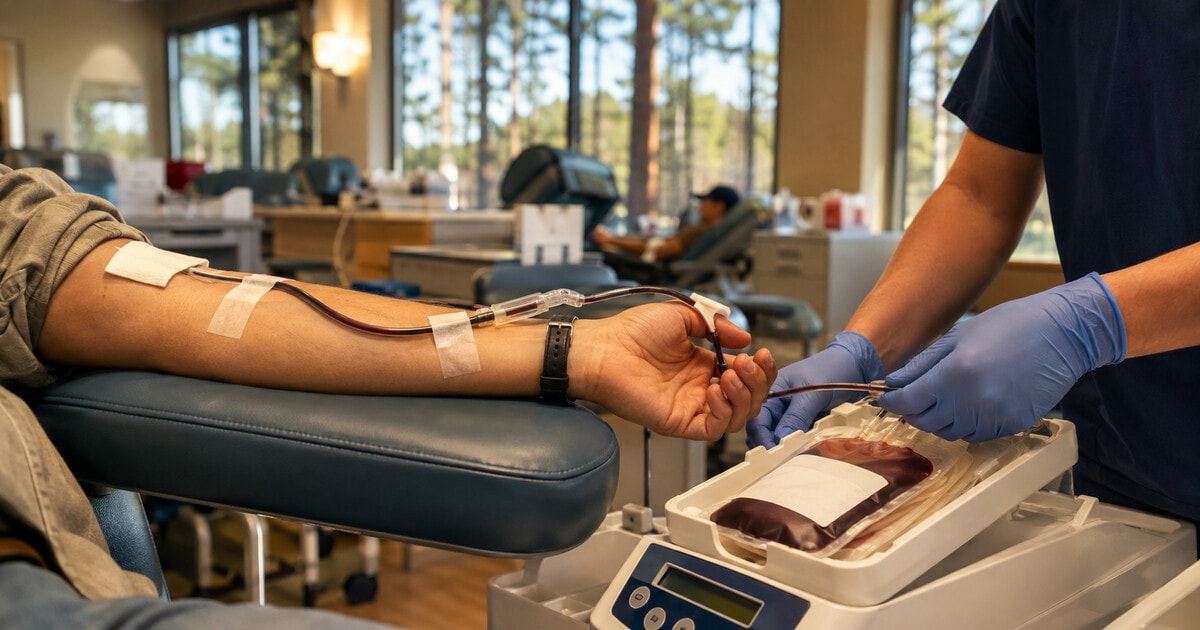
That is what makes this an East Texas hero story even though the people who supplied the lifesaving resource remain anonymous. Blood donation is usually quiet. There is no certainty about who will receive a unit, no camera at the moment the donor rolls up a sleeve, and often no later introduction between donor and patient. A person gives in advance so a hospital can act when another person's emergency arrives.
Davis has carried that gift forward. She told Carter BloodCare, "Thanks to the generosity of blood donors, I am here today." In her Aug. 2 interview with KLTV, she said, "I give blood to this day because I want to pass that gift on to somebody else that could help save their life." Her family is not only describing what donors did in 2010. Davis is asking others to continue the chain now.
The timing matters. On July 27, the American Red Cross declared only the second national blood crisis in its history. The organization said donations had fallen nearly 25 percent in June, reaching a four-year summer low. Its supply of type O-positive blood had dropped below one day, and the Red Cross said it was limiting distribution of those products to hospitals. The Red Cross is one part of the national blood system, while Carter BloodCare is an independent regional provider, so their inventory figures should not be treated as interchangeable. Both, however, were reporting serious shortages as August began.
Carter BloodCare's public inventory offered an East Texas-level warning on Aug. 2. Its live supply page listed B-negative blood at a critical level, meaning less than one day of community supply. Platelets, O-positive, O-negative and A-negative were listed as urgent, meaning roughly two to three days of supply. Those levels can change as donations arrive and hospitals use products, so residents should check the current page rather than rely on a screenshot or an older count.
East Texans have a direct place to respond. Carter BloodCare's Tyler Donor Center is at 815 Baxter Avenue near the city's hospital district. The center says it aims to collect about 600 units of whole blood each month and averages more than 11,400 units of blood products annually. Mobile drives and other donor centers are also listed through Carter BloodCare, while the Red Cross maintains a separate national blood-drive finder. Eligibility depends on current health, medications, travel and other factors, so potential donors should use an official screening tool or speak with the blood center rather than assume they are eligible or ineligible.
The Davis family's experience also shows why a reliable blood supply is public-safety infrastructure. An emergency room cannot manufacture donated blood after a patient arrives. Collection, testing, storage, transport, hospital coordination and a steady donor base all have to be in place beforehand. The heroic act may happen days or weeks before the emergency, in a donor chair far from the operating room.
This story does not establish which individual donors supplied Davis's transfusion, and it should not be used to invent details about them. It does establish, through Davis's firsthand account, Carter BloodCare's documentation and KLTV's current family interview, that donated blood was available during a life-threatening East Texas pregnancy and that Davis credits it with saving her life. The current shortage is separately documented by the Red Cross and Carter BloodCare.
For Davis, the outcome is visible in a family that kept growing and in two premature babies who are now teenagers. For East Texas, the lesson is practical: an anonymous donation can become the difference between an emergency and a funeral. The people who gave blood before Davis ever needed it may never know the full reach of what they did. That does not make their service smaller. It makes their generosity the kind of community good that works without applause.
Related RepWatchr records
Source Packet
Source review recorded August 2, 2026 by RepWatchr source desk.
Sources linked
Share the receipt, not just the outrage.
Source-backed snippet
RepWatchr story: Blood Donors Saved Amanda Davis During a Twin Delivery. Now She Is Paying It Forward. Read the linked sources and review status before sharing. https://www.repwatchr.com/news/blood-donors-saved-amanda-davis-twin-delivery
Before the meeting
Before the meeting: open Blood Donors Saved Amanda Davis During a Twin Delivery. Now She Is Paying It Forward, name the public source, ask what record answers the question, and request the missing link be posted for voters.
Ask this public question
Can you point voters to the public record, vote, filing, agenda, or source link that supports your position on Blood Donors Saved Amanda Davis During a Twin Delivery. Now She Is Paying It Forward? Current source trail: Carter BloodCare.
Your next useful move
Pick one action that adds a record, checks a claim, or shares the receipt.
Source file
This page is for the story, the receipt, and the next record to check.
Story
Blood Donors Saved Amanda Davis During a Twin Delivery. Now She Is Paying It Forward
Receipt
Source: Carter BloodCare
Follow-up
Review linked profiles, source links, or missing public records.
Social snippet
RepWatchr story: Blood Donors Saved Amanda Davis During a Twin Delivery. Now She Is Paying It Forward Why it matters: Amanda Davis needed four to five units of donated blood during an emergency twin delivery. Nearly 16 years later, the Van mother is giving back as blood supplies run critically low. Receipt: Source: Carter BloodCare Source file: https://www.repwatchr.com/news/blood-donors-saved-amanda-davis-twin-delivery