
Tyler’s Bitcoin-Mining Appeal Is Still Pending. The Council Vote Date Has Not Been Set
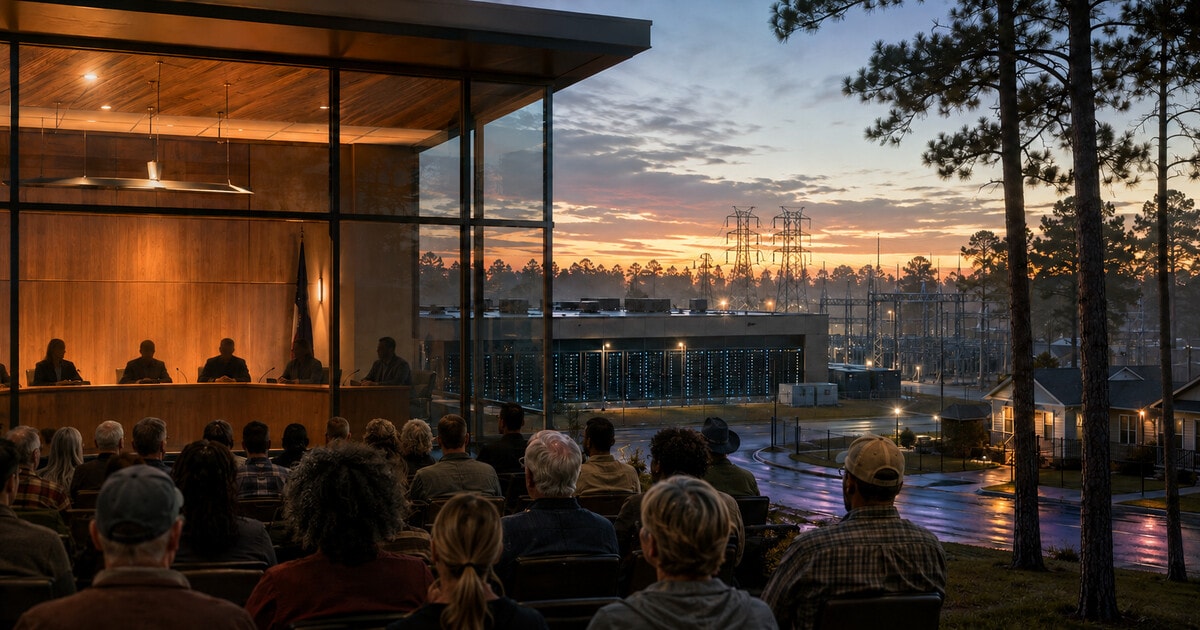
Tyler Bitcoin Mine: Rejected, Appealed, Waiting
Tyler’s Planning and Zoning Commission rejected a proposed 12-megawatt Bitcoin-mining data center 5–2. The applicant appealed, but the city still lists the City Council date as undetermined.
Tyler residents have a consequential land-use decision ahead, but they do not yet have a date for it. The city’s Planning and Zoning Commission voted 5–2 on July 7 to deny a special-use permit for a proposed Bitcoin-mining data center near downtown. The applicant appealed that denial to the City Council. As of Aug. 10, the City of Tyler’s current-applications page says the appeal will be placed on a future council agenda and that the date is still to be determined.
That status matters because Tyler’s council has a regular meeting scheduled for 9 a.m. Wednesday, Aug. 12. The meeting calendar alone does not establish that the mining appeal will be heard that day. Residents should rely on the posted agenda and any later city notice, not a rumor, an assumption or the existence of a routine meeting date. Texas open-meetings law generally requires advance notice of the subjects a governing body will consider.
The city identifies the application as case S26-003, filed under Barrio Resources LLC for 1101 and 1105 W. Erwin Street. Local reporting identifies Vulcan Core LLC as the developer and Barrio as the intended operator or lessee. The roughly 1.92-acre site is about half a mile from downtown and is currently in a light-industrial area. The proposed facility was described as an approximately 8,090-square-foot building with no more than 12 megawatts of contracted electrical capacity.
Those details should not be confused with a figure in some early local coverage that called the project 12,500 megawatts. The application reviewed by data-center trade publication Data Center Dynamics and other reporting described a 12-megawatt project. Twelve megawatts is still a substantial continuous load, but it is nowhere near 12,500 megawatts. A City Council record should state the capacity clearly so the public is not debating a typographical error.
The Planning and Zoning Commission’s vote did not create a permanent citywide ban on data centers or Bitcoin mining. It denied this special-use request at this location. The applicant’s appeal asks elected council members to make the next decision. Until the council votes, the denial remains the clearest public action, while the appeal remains unresolved.
The public debate has included legitimate questions and competing claims. Neighbors told KLTV and other local outlets they were concerned about noise, water demand, electric load, property values and the fit between an industrial computing operation and nearby homes. Developer representatives said the project was designed to avoid those harms. They described closed-loop cooling, dry-cooler heat rejection, no city-water connection for routine cooling, no diesel generators or on-site combustion, and sound controls intended to keep the operation below ordinary neighborhood noise.
Those statements should be tested against documents, not accepted or rejected based on the label “Bitcoin.” A data center can be evaluated through the same basic accountability questions Tyler applies to other intensive uses: What will be built? How much power and water will it use? What sound will reach the property line? What conditions will be enforceable? What happens if actual operations exceed the representations made during permitting?
The first record to publish is the complete appeal packet. Residents should be able to see the application, site plan, staff report, Planning and Zoning minutes, 5–2 roll call, written appeal, engineering exhibits, proposed conditions and all material submitted after the commission vote. If an exhibit changed between July 7 and the council hearing, the city should identify the revision date rather than quietly replacing an earlier version.
The second record is a usable acoustic analysis. Bitcoin-mining equipment and cooling systems can produce continuous sound, including low-frequency components that are experienced differently from ordinary daytime traffic. A persuasive study should identify the equipment model, quantity, operating schedule, fan speeds, background sound level, measurement locations, expected property-line levels and any tonal adjustment. It should also model the loudest reasonably foreseeable condition, not only an average setting.
Council members should ask how a noise condition would be enforced after construction. A permit can specify a decibel limit, measurement method, time window, compliance location and correction deadline. Without those details, a promise to be “quiet” is difficult for residents or code officers to test. The city should also explain whether its existing noise ordinance is adequate for a continuous industrial source and which department would investigate complaints.
The third record is the utility plan. The applicant has said cooling would use a closed loop and would not rely on city water. The public packet should show initial fill needs, make-up water, discharge or blowdown, stormwater management and any sanitary connection. If the facility truly avoids routine cooling-water demand, the engineering documents can confirm it. If a backup system changes that assumption, residents should know before the vote.
Electricity questions also deserve precision. Local reporting said the developer would pay for its connection and that an Oncor representative did not expect nearby customers to pay higher bills because of the project. That is different from saying the facility would have no effect on the grid. The council should request the interconnection arrangement that can legally be disclosed, planned substation or line work, maximum contracted demand, ramping behavior, curtailment capability and responsibility for upgrade costs. Protected security or proprietary details can be redacted without withholding the basic cost allocation and capacity assumptions.
The fourth record is the economic case. Representatives projected roughly seven to 10 full-time jobs and said the project was not requesting a tax abatement. They also discussed tax revenue tied to electricity use and property. The city should publish a simple fiscal estimate showing which government receives each tax, the assumptions behind the estimate, expected taxable property value, any incentive or fee waiver, and municipal service costs. Gross revenue claims should not be treated as net benefit without showing what the city must provide.
The fifth record is the land-use standard. Tyler’s planning staff and reporting have noted that data centers do not fit neatly into a dedicated zoning category. That creates a policy question larger than this application. If the city handles high-load computing facilities through special-use permits, it needs consistent criteria for distance from homes, sound, screening, power infrastructure, water, fire protection, emergency access, decommissioning and changes in operator. A one-off decision should not substitute for durable rules.
Fairness also requires acknowledging the applicant’s opportunity to answer objections. A 5–2 recommendation is meaningful, but it is not proof that the company misrepresented the project. Likewise, developer assurances do not erase residents’ concerns. Council members should separate verified design commitments from predictions and should avoid attributing motives to either side. Neighbors are entitled to defend their quality of life; a business is entitled to have its application judged by published standards.
The appeal process should produce a clean roll call. Each council member should state the conditions and evidence supporting the vote. If the council approves the permit, the enforceable conditions should be attached to the ordinance and easy to locate. If it denies the appeal, the record should identify the land-use findings rather than rely on generalized hostility toward cryptocurrency. If the hearing is postponed, the city should post the new date and explain whether additional evidence will be accepted.
Residents can prepare now without guessing the hearing date. Watch the city’s agenda page, search for case S26-003, read the July record and submit specific questions tied to sound, utilities, fire safety, fiscal impact and enforcement. People who plan to speak should check the council’s public-comment rules and avoid repeating unverified claims about emissions, water or electricity. A focused question is more useful than a slogan.
This is a local-politics story because elected officials will decide who bears the risk of a new industrial use and which promises become enforceable public obligations. It is also a transparency test. The city has already made the pending status visible: denied 5–2, appealed, future council date undetermined. The next step is to keep the full record just as clear.
RepWatchr will not tell readers that the appeal is on a particular agenda until the city posts it. When the notice appears, the accountability standard is straightforward: publish the packet early enough to review, correct the capacity figures, show the engineering assumptions, identify the enforcement conditions and record how every council member votes.
Related RepWatchr records
Source Packet
Source review recorded August 10, 2026 by RepWatchr source desk.
Sources linked
Share the receipt, not just the outrage.
Source-backed snippet
RepWatchr story: Tyler’s Bitcoin-Mining Appeal Is Still Pending. The Council Vote Date Has Not Been Set. Read the linked sources and review status before sharing. https://www.repwatchr.com/news/tyler-bitcoin-mining-data-center-appeal-2026
Before the meeting
Before the meeting: open Tyler’s Bitcoin-Mining Appeal Is Still Pending. The Council Vote Date Has Not Been Set, name the public source, ask what record answers the question, and request the missing link be posted for voters.
Ask this public question
Can you point voters to the public record, vote, filing, agenda, or source link that supports your position on Tyler’s Bitcoin-Mining Appeal Is Still Pending. The Council Vote Date Has Not Been Set? Current source trail: City of Tyler.
Your next useful move
Pick one action that adds a record, checks a claim, or shares the receipt.
Source file
This page is for the story, the receipt, and the next record to check.
Story
Tyler’s Bitcoin-Mining Appeal Is Still Pending. The Council Vote Date Has Not Been Set
Receipt
Source: City of Tyler
Follow-up
Review linked profiles, source links, or missing public records.
Social snippet
RepWatchr story: Tyler’s Bitcoin-Mining Appeal Is Still Pending. The Council Vote Date Has Not Been Set Why it matters: Tyler’s Planning and Zoning Commission rejected a proposed 12-megawatt Bitcoin-mining data center 5–2. The applicant appealed, but the city still lists the City Council date as undetermined. Receipt: Source: City of Tyler Source file: https://www.repwatchr.com/news/tyler-bitcoin-mining-data-center-appeal-2026