
Trump Ordered a Major Cut to South Korea Drills. The Exercise Had Already Begun
Trump Cuts South Korea Drills. How Much?
President Donald Trump ordered the Pentagon to substantially reduce the annual U.S.–South Korea Ulchi Freedom Shield exercise as it began Monday. The size of the cut remained undefined, leaving readiness, alliance coordination and diplomacy questions that require public answers.
President Donald Trump ordered the Pentagon to substantially reduce a major annual military exercise with South Korea just before the drills began Monday. The announcement changed the political direction of Ulchi Freedom Shield without immediately explaining which forces, scenarios or field events would be removed.
Trump issued the directive Sunday in a Truth Social post and said he had instructed Defense Secretary Pete Hegseth to scale back the exercise. He cited cost, his relationship with North Korean leader Kim Jong Un and his view that large drills send an unnecessarily hostile signal to Pyongyang. He also tied his frustration to South Korea's refusal to join U.S. efforts concerning Iran's nuclear program, according to the Associated Press and Reuters.
The administration has authority to set military policy, and reducing an exercise can be used as a diplomatic signal. But a signal is not the same thing as an operational plan. At publication time, the Pentagon had not publicly defined the size of the reduction, identified canceled events or explained how commanders would preserve the most important training objectives.
South Korea's Defense Ministry said the 11-day Ulchi Freedom Shield exercise began Monday as planned. AP reported that about 18,000 South Korean troops were scheduled to participate. The U.S. military's official description calls the exercise a combined, joint, all-domain and interagency training environment designed to strengthen the alliance's defense posture and response to a range of security threats.
Those two facts can coexist: the exercise started, and its later scope can still be reduced. Residents and lawmakers should avoid language suggesting the drills were fully canceled unless the Pentagon says so. They should also avoid claiming nothing changed simply because the opening phase proceeded. The unanswered question is what the order removes after forces and planners have already committed time and resources.
Ulchi Freedom Shield is not a combat operation. It is an annual readiness exercise involving command posts, simulated scenarios and field training across military services. U.S. and South Korean officials have historically described it as defensive. North Korea regularly condemns the drills as preparation for invasion and often uses them to justify military demonstrations or weapons tests.
The administration's argument is that a smaller exercise can reduce expense and avoid antagonizing Kim while creating space for diplomacy. South Korea's government responded Monday by expressing hope that Trump's decision could help restart U.S.–North Korea talks. President Lee Jae Myung has pursued engagement with the North and has called for renewed dialogue. That is a real policy objective, not merely a public-relations explanation.
The readiness counterargument is also concrete. Combined militaries have to practice communications, command relationships, logistics and procedures before a crisis. U.S. Forces Korea wrote during the spring Freedom Shield exercise that interoperability is built through repetition and that readiness degrades without practice. Scaling down does not automatically destroy readiness, but commanders should identify which capabilities will receive less testing and how they will compensate.
Trump has taken a similar approach before. After his 2018 summit with Kim in Singapore, the Pentagon suspended planning for the Ulchi Freedom Guardian exercise while diplomacy continued. That precedent shows a president can use military training as negotiating leverage. It also gives Congress and the public a record against which to compare whether diplomatic concessions produce durable security results.
The regional environment is not static. North Korea recently resumed ballistic-missile testing after a pause, according to AP, and its weapons program has advanced since the breakdown of Trump–Kim talks in 2019. Pyongyang has also deepened ties with Russia. Any reduction should therefore be judged against current capabilities and behavior, not only the atmosphere surrounding earlier summits.
The alliance question extends beyond one exercise. U.S. forces are stationed in South Korea under a mutual-defense relationship rooted in the 1953 treaty and armistice. Seoul has its own elected government, military chain of command and domestic debate about engagement. A sudden American announcement can be lawful and still require close coordination so allied units do not receive conflicting expectations.
South Korea's public response was measured. Officials said defense coordination with the United States would continue while leaving room for dialogue with the North. That response should not be misread as proof that Seoul requested the reduction or had complete advance notice. AP reported that the announcement appeared to surprise the South Korean government. The White House and Pentagon should disclose the timeline of consultations without releasing operational secrets.
Congress has a legitimate oversight role. Democratic Sen. Mark Kelly of Arizona, a Navy veteran and member of the Senate Armed Services Committee, criticized the decision as harmful to preparedness. Republicans may defend the president's diplomatic and budget judgment. The useful congressional response is not partisan choreography; it is a classified briefing followed by a public explanation of cost, readiness effects and allied consultation.
Cost claims should be documented. Trump called the exercises expensive, but the Sunday announcement did not provide a current cost estimate or projected savings. The Pentagon should publish the incremental cost of Ulchi Freedom Shield, the amount saved by the reduction and any costs already incurred that cannot be recovered. Moving personnel and equipment before changing the scope can reduce the savings from a late decision.
Diplomatic claims also need a test. If the reduction is intended to open negotiations, the administration should define what it seeks: a meeting, a testing pause, restored military hotlines, limits on missile activity or a broader nuclear agreement. The details of negotiation may remain private, but the public can still be told what behavior would justify maintaining, expanding or reversing the reduction.
Operational transparency has limits. Publishing exact scenarios, vulnerabilities or force movements would be irresponsible. Yet officials can answer basic policy questions safely: how many training events changed, whether live-fire events were affected, whether command-post training continues, whether other allied exercises will compensate and when commanders will assess readiness.
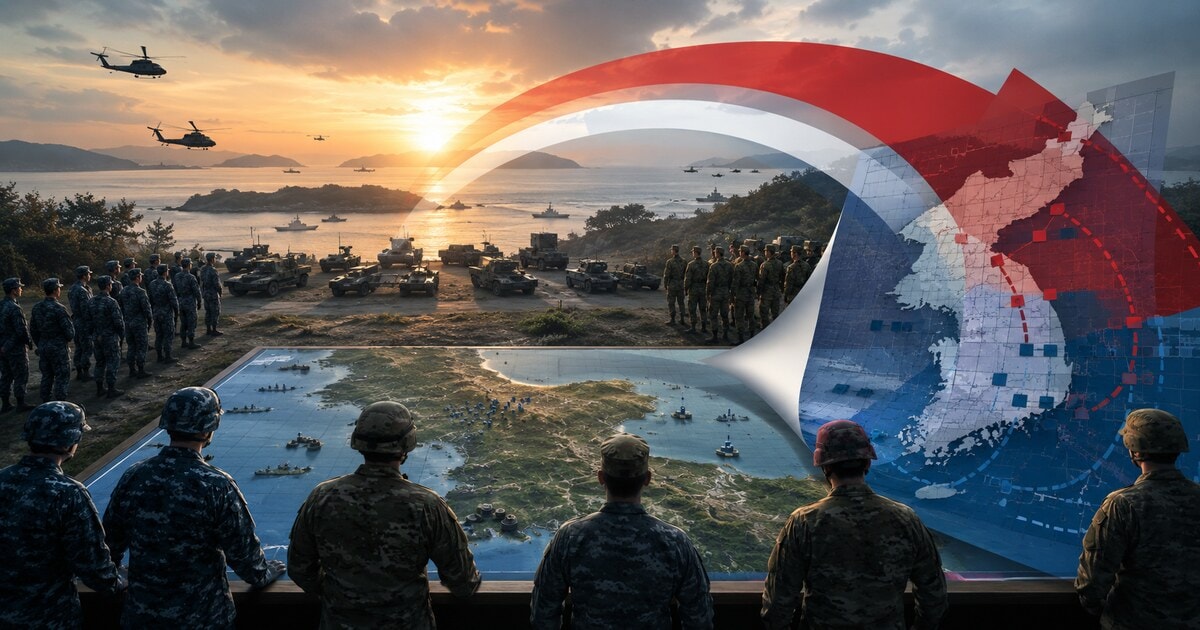
The image accompanying this article is an original symbolic illustration. It does not depict the current exercise, a real unit or a specific military movement. That distinction is especially important in a fast-moving security story, where a dramatic visual can falsely imply evidence that the public record does not contain.
The immediate accountability checklist is short. The Pentagon should define the reduction; the White House should explain the diplomatic objective; Seoul and Washington should clarify their consultation; commanders should identify readiness safeguards; and Congress should obtain the cost and threat assessments. North Korea's response should be reported as a response, not accepted as proof that the policy succeeded or failed on day one.
A president may decide that diplomacy warrants accepting some training risk. Military leaders may conclude that specific exercises can be redesigned without weakening deterrence. Those are judgments, not self-proving facts. The public needs enough evidence to see what was traded, what was preserved and who will measure the result.
Ulchi Freedom Shield began Monday under a newly narrowed political order whose operational boundaries were still unclear. That is the central fact. The administration has made the signal. Its next responsibility is to show allies, service members, Congress and the country what the signal changes in practice.
Related RepWatchr records
Source Packet
Source review recorded August 17, 2026 by RepWatchr source desk.
Public Discussion
0 commentsSources linked
Share the receipt, not just the outrage.
Source-backed snippet
RepWatchr story: Trump Ordered a Major Cut to South Korea Drills. The Exercise Had Already Begun. Read the linked sources and review status before sharing. https://www.repwatchr.com/news/trump-south-korea-military-exercises-reduction-2026
Before the meeting
Before the meeting: open Trump Ordered a Major Cut to South Korea Drills. The Exercise Had Already Begun, name the public source, ask what record answers the question, and request the missing link be posted for voters.
Ask this public question
Can you point voters to the public record, vote, filing, agenda, or source link that supports your position on Trump Ordered a Major Cut to South Korea Drills. The Exercise Had Already Begun? Current source trail: Associated Press.
Your next useful move
Pick one action that adds a record, checks a claim, or shares the receipt.
Source file
This page is for the story, the receipt, and the next record to check.
Story
Trump Ordered a Major Cut to South Korea Drills. The Exercise Had Already Begun
Receipt
Source: Associated Press
Follow-up
Review linked profiles, source links, or missing public records.
Social snippet
RepWatchr story: Trump Ordered a Major Cut to South Korea Drills. The Exercise Had Already Begun Why it matters: President Donald Trump ordered the Pentagon to substantially reduce the annual U.S.–South Korea Ulchi Freedom Shield exercise as it began Monday. The size of the cut remained undefined, leaving readiness, alliance coordination and diplomacy questions that require public answers. Receipt: Source: Associated Press Source file: https://www.repwatchr.com/news/trump-south-korea-military-exercises-reduction-2026