
Trump pauses new Iran strikes and says talks will begin Monday. Here is what is confirmed
Iran Strike Pause: No Joint Deal Released
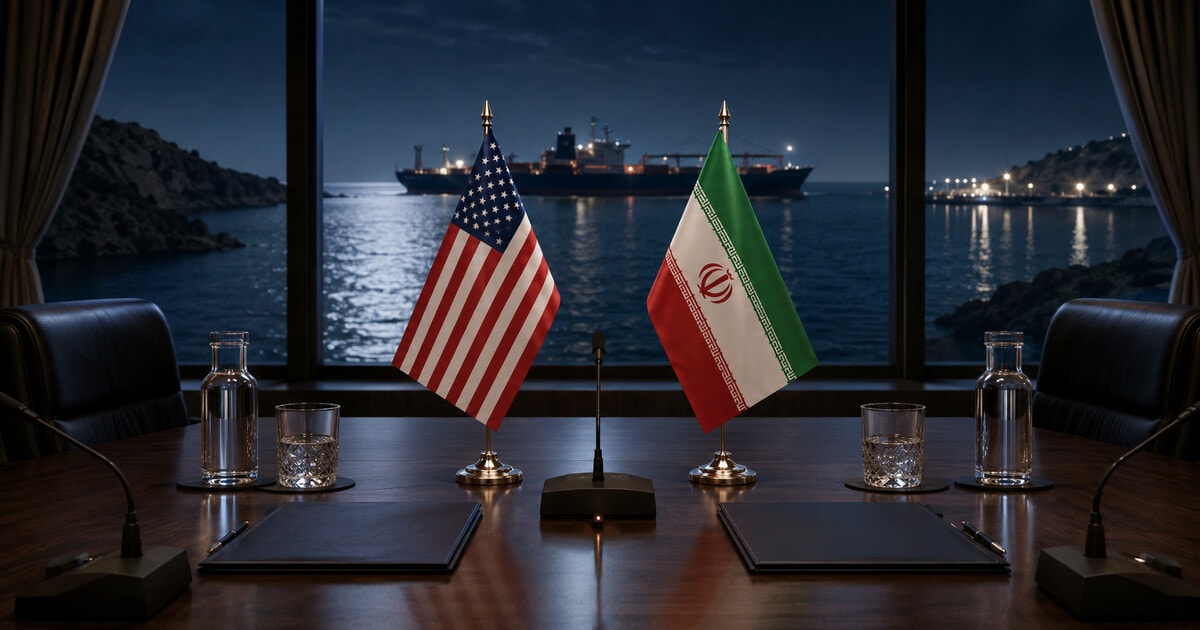
President Donald Trump says U.S.-Iran negotiations will begin Monday after he called off planned strikes, but no joint agreement or confirmed reopening of the Strait of Hormuz has been released.
President Donald Trump said Sunday that negotiations with Iran would begin Monday afternoon after he called off a planned U.S. military attack. The announcement may create an opening for diplomacy after five months of war, but the public record does not yet support calling it a peace agreement. No joint text has been released, neither side has identified the meeting place or delegations, and Iran has not publicly confirmed the full terms Trump described.
That distinction matters. The confirmed fact is that Trump publicly announced a pause and said talks were scheduled. The proposed outcome — a complete reopening of the Strait of Hormuz and an end to what the president calls Iran's nuclear threat — remains a claim about negotiations, not an implemented agreement. Americans should be able to welcome an effort to stop the fighting while still requiring documentary proof of what each government accepted.
What Trump announced. In a late Saturday post on Truth Social, Trump said Iran and other Middle Eastern countries had asked the United States to hold off on an attack because the outlines of a deal had been reached. He said the contemplated terms included the immediate and complete reopening of the Strait of Hormuz and resolution of U.S. concerns about Iran's nuclear program. He made the cancellation conditional on reaching a deal rapidly.
Speaking with reporters aboard Air Force One on Sunday, Trump said negotiations would begin Monday afternoon. He did not name a location, identify the participants, or set a public deadline. The White House posted video of that exchange. Reuters and The Associated Press separately reported the announcement.
Trump also said the views of Qatar, Saudi Arabia, and the United Arab Emirates influenced his decision. He described a Saturday conversation with Saudi Crown Prince Mohammed bin Salman, who, according to Trump's account, preferred diplomacy because a new attack could lead to wider consequences. Trump further said the military operation planned for Sunday would have been exceptionally large. No public Pentagon document independently detailing that operation had been released by publication time, so its scale should be attributed to the president rather than stated as independently established fact.
What Iran has said. Iran's public language is more guarded than Trump's. Iranian Foreign Ministry spokesman Esmail Baghaei said Sunday that the Strait of Hormuz would not return to its status before February 28, the date the current war began. He also said Iran's discussions with Oman concerned a new maritime route and were separate from the question of fully opening or closing the strait. Iran's defense minister said the country remained alert after Trump's announcement.
An official Iranian Foreign Ministry statement published July 26 provides additional context. It said Iranian and Omani officials had discussed principles and operating mechanisms for safe maritime passage while respecting the sovereign rights of both countries bordering the strait. It also said no change had occurred in the status of maritime traffic at that time. Those statements do not prove that Monday's negotiations will fail, but they do mean the public should not treat a full reopening as a completed fact.
Why Hormuz matters at home. Before the war, the Strait of Hormuz carried about one-fifth of the world's oil and liquefied natural gas, according to Reuters. Iran's restrictions on traffic have disrupted shipping, raised energy costs, and added inflation pressure far beyond the Middle East. Oil prices fell more than 4 percent in early Monday trading after Trump's announcement, reflecting hope for de-escalation. That market movement is not proof of an agreement; it shows how quickly expectations about Hormuz can affect prices.
The consequences reach American households and businesses. Global crude prices can flow through to gasoline, diesel, aviation, freight, and manufacturing costs. They also matter in Texas, where producers, refiners, truckers, farmers, and families feel changes in energy markets from different directions. A durable reopening could ease some pressure. Another collapse in negotiations could restore it.
A history of pauses followed by renewed fighting. The current conflict began February 28 with U.S. and Israeli attacks on Iran. The Associated Press has documented several later moments when threatened or ongoing attacks were paused for diplomacy and then resumed. A two-week ceasefire was announced April 7 and extended April 21, but U.S. strikes returned May 8. Trump paused another threatened attack May 18 while negotiations proceeded; strikes resumed May 27.
On June 17, the parties entered an initial memorandum intended to end hostilities and start a 60-day negotiating period over Iran's nuclear program. Fighting later resumed. The United States launched new strikes July 7 after attacks on shipping, and Trump announced another pause July 27 following nearly two weeks of intense attacks. On August 1, he canceled the latest planned strike subject to making a rapid deal. This history does not establish that the current effort will fail. It does establish why implementation matters more than an announcement.
What the public should watch Monday. First, do the governments identify their delegations and venue? Second, do they release a joint statement or written framework rather than separate descriptions? Third, does commercial traffic through Hormuz measurably resume, under what rules, and with what security guarantees? Fourth, do any nuclear provisions include defined limits and an independent verification process? Fifth, what ceasefire terms govern U.S., Iranian, Israeli, and aligned forces while talks continue?
Congress also has an accountability role. Military operations, appropriations, briefings, and war-powers questions do not disappear when negotiations begin. Lawmakers should tell the public what legal authority the administration is relying on, what information Congress has received, and what votes or oversight will follow. RepWatchr previously documented the War Powers questions surrounding this conflict and will continue linking official statements and votes to the people responsible for them.
The responsible conclusion tonight is narrow but important: Trump has paused a planned attack and says negotiations will begin Monday. That is a meaningful development. It is not yet a verified peace deal, a confirmed full reopening of Hormuz, or proof that the nuclear dispute has been resolved. The next test is whether Monday produces a shared public record and observable action.
Related RepWatchr records
Source Packet
Source review recorded August 2, 2026 by RepWatchr source desk.
Sources linked
Share the receipt, not just the outrage.
Source-backed snippet
RepWatchr story: Trump pauses new Iran strikes and says talks will begin Monday. Here is what is confirmed. Read the linked sources and review status before sharing. https://www.repwatchr.com/news/trump-pauses-iran-strikes-talks-monday-hormuz
Before the meeting
Before the meeting: open Trump pauses new Iran strikes and says talks will begin Monday. Here is what is confirmed, name the public source, ask what record answers the question, and request the missing link be posted for voters.
Ask this public question
Can you point voters to the public record, vote, filing, agenda, or source link that supports your position on Trump pauses new Iran strikes and says talks will begin Monday. Here is what is confirmed? Current source trail: The White House.
Your next useful move
Pick one action that adds a record, checks a claim, or shares the receipt.
Source file
This page is for the story, the receipt, and the next record to check.
Story
Trump pauses new Iran strikes and says talks will begin Monday. Here is what is confirmed
Receipt
Source: The White House
Follow-up
Review linked profiles, source links, or missing public records.
Social snippet
RepWatchr story: Trump pauses new Iran strikes and says talks will begin Monday. Here is what is confirmed Why it matters: President Donald Trump says U.S.-Iran negotiations will begin Monday after he called off planned strikes, but no joint agreement or confirmed reopening of the Strait of Hormuz has been released. Receipt: Source: The White House Source file: https://www.repwatchr.com/news/trump-pauses-iran-strikes-talks-monday-hormuz