
Lufkin Dental Volunteers Gave East Texans Free Care. The Service Went Far Beyond a Cleaning
Lufkin’s Free Dental Day Went Beyond Cleanings
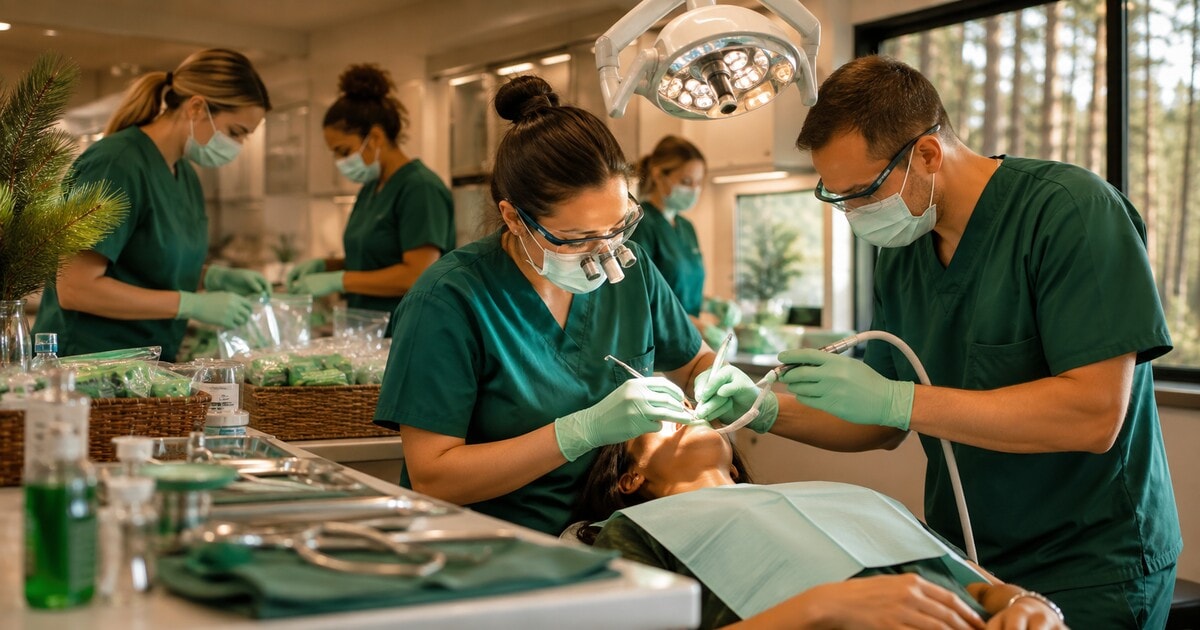
Volunteers at Goodland Dentistry in Lufkin provided free exams, emergency treatment, extractions and restorative care during Sharing Smiles Day, part of a 2026 effort that served 466 patients through 22 practices in nine states.
A dental chair can be an intimidating place even before a family sees the bill. On May 31, volunteers at Goodland Dentistry in Lufkin used their clinical skills and a day away from ordinary schedules to remove that financial barrier for East Texans who needed care.
KTRE reported that the Lufkin team provided free dental exams, limited emergency care, extractions and restorative treatment as part of Sharing Smiles Day, a program organized by Benevis and participating dental practices. Those are not symbolic services. An exam can identify an infection. A restoration can preserve a tooth. An extraction can end pain or prevent a worsening emergency when a tooth cannot be saved.
The local report did not publish a Lufkin-only patient count, and RepWatchr will not invent one. The program's official 2026 summary says 466 patients received care across 22 participating practices in nine states, supported by approximately 360 volunteers. Those are national program totals, not numbers that should be attributed to the Lufkin office alone.
That distinction matters because community-good reporting should be precise. The volunteers deserve recognition for work the record verifies: they gathered at the Lufkin practice, treated patients without charging them for the listed services and took part in a broader effort that reached hundreds of people. Praise does not require exaggeration.
The work also addressed a real health gap. The Centers for Disease Control and Prevention reports that one in five adults ages 20 to 64 has at least one untreated cavity. Among working-age adults, untreated cavities are much more common for people without health insurance than for those with private coverage. For children, untreated tooth decay can interfere with eating, speaking, playing and learning.
Dental pain is easy to minimize from a distance. In practice, it can interrupt sleep, school, work and nutrition. An untreated cavity can grow into an abscess; a broken tooth can make it difficult to eat; and delaying care can turn a manageable restoration into an extraction or emergency visit. A free-care day cannot repair every weakness in the dental system, but it can change the immediate course for the person in the chair.
Clinical volunteering asks more than goodwill. Dentists, hygienists, assistants and office staff must prepare rooms, review medical histories, sterilize instruments, document care, manage infection controls and make treatment decisions under the same professional obligations that apply on an ordinary workday. Administrative volunteers also help patients move through registration and follow-up instructions. The visible procedure is only the center of a larger safety system.
Sharing Smiles Day's official eligibility information says the program is intended for uninsured or underinsured children and families, with treatment based on what the examining dentist determines is needed and what the event can provide. Care is limited and first-come, first-served after required preregistration. That means the program is valuable, but it is not an open-ended promise of free treatment or a replacement for an ongoing dental home.
Goodland Dentistry's community-outreach page describes the event as a volunteer partnership with Benevis and emphasizes care for children without dental insurance. The national program's 2026 page uses broader language covering children and families. Residents considering a future event should rely on the next year's official eligibility and registration rules rather than assuming the 2026 terms will remain unchanged.
The completed 2026 event also offers a useful lesson for organizations that want to help. Effective service matched a specialized local resource—licensed dental professionals and equipped treatment rooms—with a clearly defined access problem. The volunteers did not merely raise awareness. They delivered care that would normally require an appointment, trained staff, clinical supplies and money.
There is a second lesson in the numbers. About 360 volunteers supported 466 patients nationwide, according to the program. That ratio reflects how labor-intensive safe dental treatment is. It also explains why appointment limits are necessary and why expanding access takes more than asking a few clinicians to work faster. Sustainable help requires volunteer recruitment, donated materials, scheduling, referrals and a plan for patients whose needs exceed what can be completed in one visit.
The CDC says routine dental visits allow for prevention, early detection and treatment. It also notes that people with lower income, less education, no health coverage or rural residence use dental care less often. Those patterns are especially relevant in Deep East Texas, where travel distance and provider availability can compound cost. A single Lufkin event cannot solve those structural problems, but it puts trained help in the same community where the barrier exists.
Residents who still need low-cost care should not wait for next year's volunteer day if they have pain, swelling, fever, trauma or another urgent concern. The National Institute of Dental and Craniofacial Research recommends contacting local or state health departments, calling 2-1-1 for community services, and checking dental or dental-hygiene school clinics for reduced-cost care. Emergency symptoms require prompt professional evaluation.
Public recognition should protect patient dignity. Neither the need for free treatment nor a person's dental condition is a moral failure. Photographs and testimonials can help a program recruit support, but patients should control whether their identity or medical story is shared. The strongest account of this event centers the verified service without turning private health information into publicity.
Goodland and Benevis should publish a concise local outcome after future events: Lufkin patients treated, procedures completed, volunteer hours, donated supply value and the number of referrals for follow-up. Aggregate reporting can show impact without exposing any patient. It would also help the community understand which services are most needed and where additional partners could make the next event stronger.
The volunteer team in Lufkin did something concrete and meaningfully helpful. They brought professional skill, equipment and time to neighbors who faced a cost barrier. They did not erase the region's dental-access problem, and the record does not support a dramatic rescue narrative. What it supports is more grounded: people in pain or in need of treatment entered a clinic, and trained East Texans chose to care for them without sending a bill for the day's services.
That is community service with measurable substance. It deserves both gratitude and follow-through—more prevention, clearer referral paths, transparent local results and another carefully organized day of care when the program returns.
Related RepWatchr records
Source Packet
Source review recorded August 16, 2026 by RepWatchr source desk.
Public Discussion
0 commentsSources linked
Share the receipt, not just the outrage.
Source-backed snippet
RepWatchr story: Lufkin Dental Volunteers Gave East Texans Free Care. The Service Went Far Beyond a Cleaning. Read the linked sources and review status before sharing. https://www.repwatchr.com/news/lufkin-sharing-smiles-free-dental-care-2026
Before the meeting
Before the meeting: open Lufkin Dental Volunteers Gave East Texans Free Care. The Service Went Far Beyond a Cleani..., name the public source, ask what record answers the question, and request the missing link be posted for voters.
Ask this public question
Can you point voters to the public record, vote, filing, agenda, or source link that supports your position on Lufkin Dental Volunteers Gave East Texans Free Care. The Service Went Far Beyond a Cleani...? Current source trail: KTRE.
Your next useful move
Pick one action that adds a record, checks a claim, or shares the receipt.
Source file
This page is for the story, the receipt, and the next record to check.
Story
Lufkin Dental Volunteers Gave East Texans Free Care. The Service Went Far Beyond a Cleaning
Receipt
Source: KTRE
Follow-up
Review linked profiles, source links, or missing public records.
Social snippet
RepWatchr story: Lufkin Dental Volunteers Gave East Texans Free Care. The Service Went Far Beyond a Cleaning Why it matters: Volunteers at Goodland Dentistry in Lufkin provided free exams, emergency treatment, extractions and restorative care during Sharing Smiles Day, part of a 2026 effort that served 466 patients through 22 practices in nine states. Receipt: Source: KTRE Source file: https://www.repwatchr.com/news/lufkin-sharing-smiles-free-dental-care-2026