
East Texas Landowners Want Answers as Texas Reviews 765-kV Power-Line Impacts
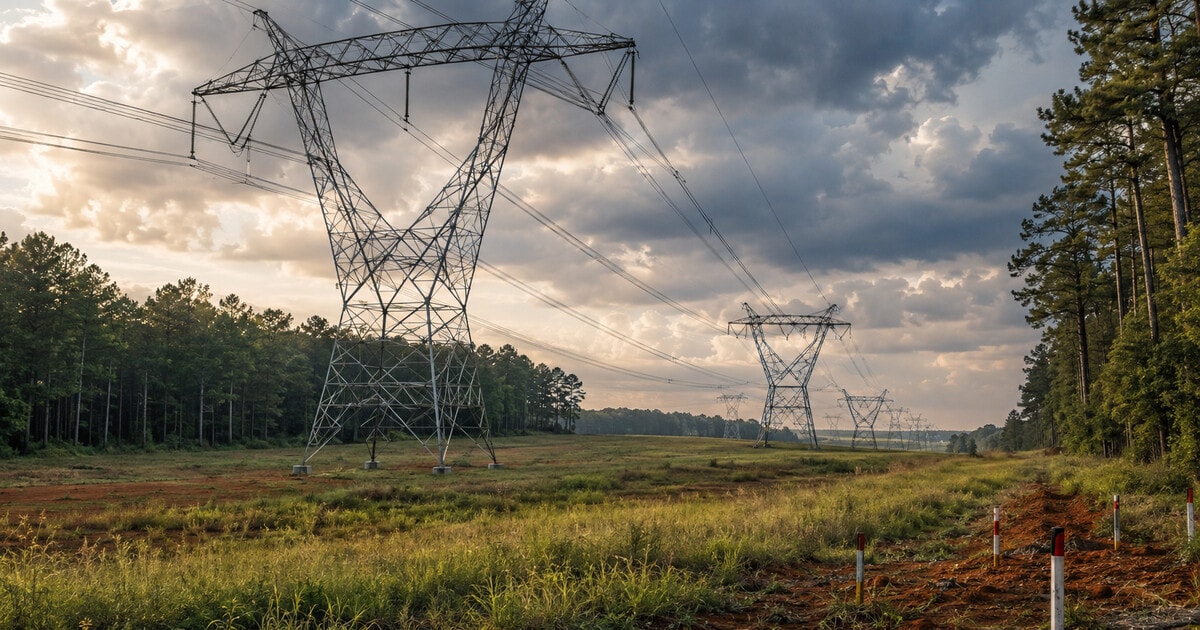
East Texas Power Lines: Which Land?
A July 29 Texas Senate hearing put property rights and grid planning under scrutiny as ERCOT's $9.384 billion Eastern Backbone proposal includes a Rusk County substation but still lacks final parcel-level routes.
Texas lawmakers put one of the state's largest proposed power-grid buildouts under a property-rights microscope on July 29. The Senate Business & Commerce Committee met in Austin to hear invited and public testimony about proposed 765-kilovolt transmission lines and whether Texas' current regulatory process gives families, farms, and businesses enough protection. For East Texans, the issue is not theoretical: the official Eastern Backbone plan includes a substation in Rusk County, while residents in nearby counties are already asking whether future routes could reach their land.
The committee hearing, chaired by state Sen. Charles Schwertner, was an oversight proceeding, not a vote on a final route. Its published charge directed senators to review impacts on homes, businesses, communities, long-term land use, property values, and environmental factors. It also asked whether existing timelines and procedures adequately protect landowners. Those questions matter because a broad grid plan and an approved parcel-level route are two different stages of the process.
The locally relevant piece is ERCOT's proposed Eastern Backbone, submitted jointly by AEP Texas, CPS Energy, Oncor, and CenterPoint Energy Houston Electric. ERCOT's independent review describes a Tier 1 reliability project estimated at $9.384 billion, with approximately 1,108.8 miles of new right-of-way and an expected in-service window of 2030 to 2032. The plan calls for new 765-kV infrastructure connecting several substations and identifies Rusk County as one of the counties with a project substation. ERCOT says one or more Certificates of Convenience and Necessity from the Public Utility Commission of Texas will be required before the new lines can be constructed.
The Eastern Backbone is one part of the wider Texas 765-kV Strategic Transmission Expansion Plan, commonly called STEP. ERCOT's comparison document estimates the wider plan at approximately $32.99 billion and includes 2,468 miles of new 765-kV lines, along with new and upgraded infrastructure at lower voltages. That $32.99 billion figure is an estimated construction cost. It should not be confused with a lifetime-cost estimate, which measures something different and is not established in the official planning documents included with this article.
ERCOT's case for the higher-voltage system rests on reliability and rapidly growing demand. Its Eastern Backbone review says forecast summer peak demand for 2030 exceeds 150 gigawatts, including approximately 50 gigawatts attributed to large-load growth. The agency says 765-kV lines can move more power over long distances, reduce line losses, expand regional transfer capability, and limit the number of difficult upgrades to an already heavily used grid. ERCOT reports that it considered more than 75 alternatives during its planning analysis.
There are real tradeoffs in ERCOT's own comparison. The 765-kV option has an estimated construction cost $2.24 billion higher than the modeled 345-kV alternative and would require 434 more miles of new right-of-way. At the same time, ERCOT says it would avoid roughly 1,400 miles of upgrades to existing lower-voltage infrastructure, reduce long-term systemwide transmission losses by about 5%, and produce approximately $229 million more in annual consumer-energy savings than the 345-kV alternative. That is a comparison between two expansion plans, not a promise that any household's bill will fall by a particular amount.
The most important fact for potentially affected East Texas landowners is what has not been decided. ERCOT states that the geographic lines in its planning maps show general electrical point-to-point connections. The PUCT, through later certificate proceedings with transmission providers, determines specific routes. The Eastern Backbone review identifies Rusk County as a substation location and says lines will cross other counties, but it does not establish a final route through Smith County, Van Zandt County, or any individual parcel there.
That distinction has sometimes been blurred in public discussion. In a July 30 KLTV report, Canton resident Nancy White said projected corridors could affect Van Zandt and Smith counties and described concerns about private land and agriculture. Molly Vogt, identified by KLTV as state director for American Energy Works, urged state officials to pause the project and consider building reliable generation closer to where power is needed. Those are identifiable resident and advocacy positions. They are not final findings by ERCOT or the PUCT, and RepWatchr is not presenting them as settled engineering conclusions.
The same caution applies to acreage and lifetime-cost claims. Because a specific route is not final, the source packet does not establish a final number of affected East Texas acres. RepWatchr is therefore relying on ERCOT's documented project scope, construction estimates, and right-of-way mileage while clearly attributing arguments made by opponents. Accountability reporting should neither dismiss landowners' concerns nor convert an advocacy estimate into an official fact.
The immediate public-interest question is whether Texans will receive meaningful notice and a practical opportunity to participate before route decisions harden. Future CCN filings should identify route alternatives, affected counties and parcels, estimated costs, environmental considerations, and the process for public intervention. Residents should watch the PUCT docket system and notices from the transmission providers rather than treating a planning map or social-media post as a final condemnation notice. Anyone receiving a project-specific property document should verify what it covers rather than relying on a generalized online map.
State officials also owe residents a transparent explanation of who benefits, who pays, and how forecasts will be updated if projected demand changes. ERCOT says major portions of both the 345-kV and 765-kV plans remain necessary even under a sensitivity case with roughly 20 gigawatts less demand. That analysis supports the agency's reliability argument, but it does not end debate over route selection, cost allocation, agricultural disruption, property value, or whether alternative generation and transmission combinations could reduce local harm.
Schwertner's role in this story is procedural and should be judged on the record: he chaired the committee charged with examining private-property impacts. The next accountability test is what the committee does with the testimony. East Texans should be able to see any resulting recommendations, proposed safeguards, legislative changes, or requests to the PUCT. Silence after a public hearing would leave the most important questions unanswered.
Texas needs a grid capable of serving families, farms, businesses, and future growth. It also needs a process that treats private property as more than an obstacle between two points on a planning map. Both principles can be true at once. The responsible path is to test ERCOT's reliability claims against the record, require route-specific disclosure before decisions are made, give affected residents a genuine voice, and hold every agency, utility, and elected official to the same documented standard.
Related RepWatchr records
Source Packet
Source review recorded August 2, 2026 by RepWatchr source desk.
Officials Mentioned
Sources linked
Share the receipt, not just the outrage.
Source-backed snippet
RepWatchr story: East Texas Landowners Want Answers as Texas Reviews 765-kV Power-Line Impacts. Read the linked sources and review status before sharing. https://www.repwatchr.com/news/east-texas-765kv-transmission-landowners-senate-hearing
Before the meeting
Before the meeting: open East Texas Landowners Want Answers as Texas Reviews 765-kV Power-Line Impacts, name the public source, ask what record answers the question, and request the missing link be posted for voters.
Ask this public question
Can you point voters to the public record, vote, filing, agenda, or source link that supports your position on East Texas Landowners Want Answers as Texas Reviews 765-kV Power-Line Impacts? Current source trail: Texas Senate Business & Commerce Committee.
Your next useful move
Pick one action that adds a record, checks a claim, or shares the receipt.
Source file
This page is for the story, the receipt, and the next record to check.
Story
East Texas Landowners Want Answers as Texas Reviews 765-kV Power-Line Impacts
Receipt
Source: Texas Senate Business & Commerce Committee
Follow-up
Review linked profiles, source links, or missing public records.
Social snippet
RepWatchr story: East Texas Landowners Want Answers as Texas Reviews 765-kV Power-Line Impacts Why it matters: A July 29 Texas Senate hearing put property rights and grid planning under scrutiny as ERCOT's $9.384 billion Eastern Backbone proposal includes a Rusk County substation but still lacks final parcel-level routes. Receipt: Source: Texas Senate Business & Commerce Committee Source file: https://www.repwatchr.com/news/east-texas-765kv-transmission-landowners-senate-hearing